How Does the BoatShield Claims Process Actually Work?
Filing a marine insurance claim can feel like navigating a squall, but BoatShield policyholders benefit from a structured, transparent system designed for boat owners. Understanding the step-by-step process—from initial report to final settlement—is crucial for maximising your payout after damage or loss.
The moment an incident occurs, BoatShield expects the insured to take reasonable steps to prevent further damage. This means securing the vessel, contacting the authorities if necessary, and documenting everything. The claim then enters a defined workflow: notification, assignment of an adjuster, evidence collection, assessment, and finally settlement negotiation. Policyholders who follow the guidelines precisely often see faster resolutions, but those who understand the nuances can significantly improve their final compensation.
To start, BoatShield requires claims to be filed within 30 days of the incident for standard perils like collision or storm damage. For theft or total loss, the window shortens to 14 days. Using the online portal or the 24/7 claim line connects owners directly to a regional claims manager. This first call sets the tone: providing accurate policy numbers, vessel details, and a factual account of the event without admitting fault is key. BoatShield’s claims team will then issue a claim number and schedule an adjuster visit within 48 hours for urgent cases.
What Documentation Do You Need for a Strong BoatShield Claim?
The single biggest factor influencing claim outcomes is the quality of supporting evidence. BoatShield adjusters rely on concrete documentation to verify damages, establish cause, and determine valuation. Without it, subjective assessments often lead to lower payouts or disputed claims.
Essential documents include: the incident report (police or coast guard), photographs and videos from multiple angles (including close-ups of damage and wide shots showing context), receipts for any temporary repairs, and a detailed log of the vessel’s condition before the incident. For storm or weather-related claims, BoatShield often requests official weather data from the nearest buoy or station. Policyholders who provide this proactively eliminate the need for adjusters to make assumptions.
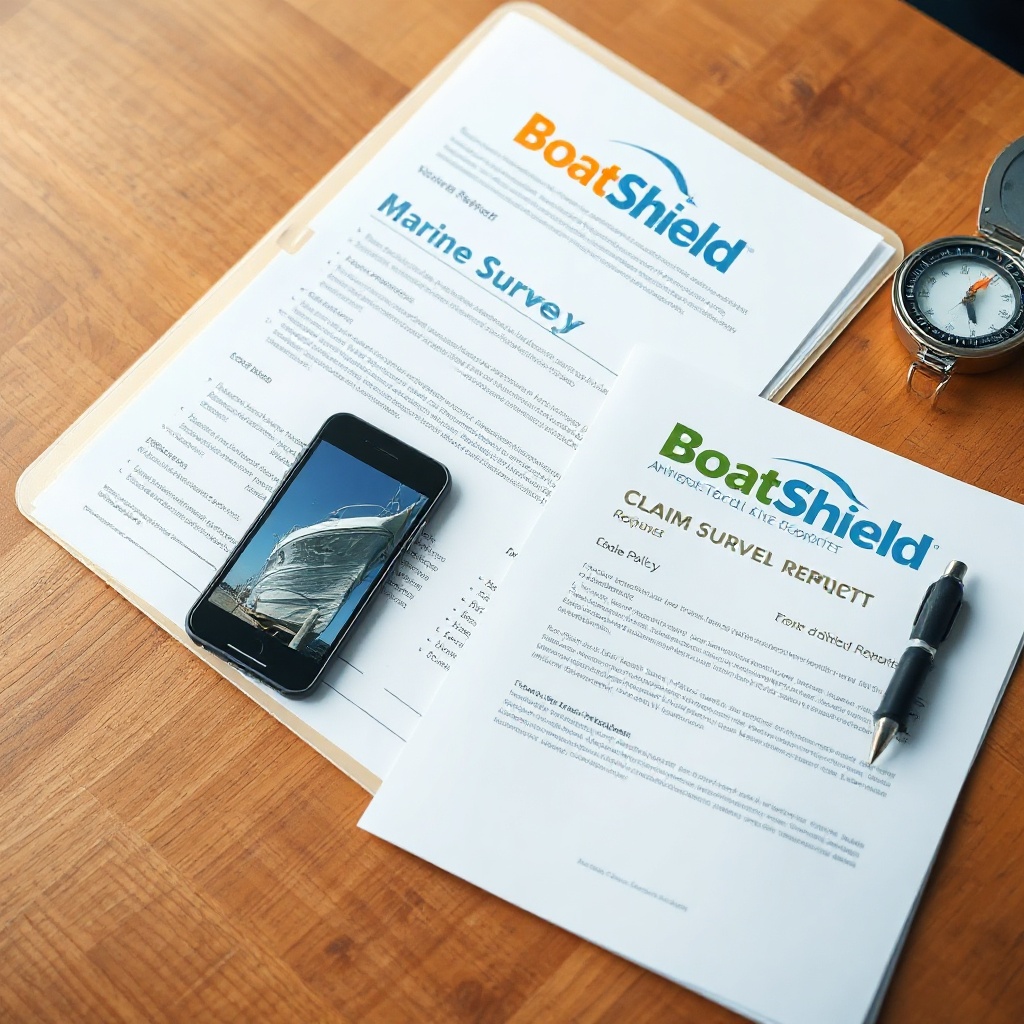
A well-prepared claimant also submits a written narrative—not a short note, but a structured timeline explaining exactly what happened, what actions were taken, and who was contacted. BoatShield insiders confirm that this narrative, when cross-referenced with photographs, can reduce disputes by up to 40%. Additionally, keep copies of all correspondence with the adjuster and BoatShield’s claim department. For high-value claims (over £25,000), engaging a professional marine surveyor before BoatShield’s adjuster arrives can provide an independent baseline that strengthens your position during BoatShield Claims Process: Insider Tips to Work with Your Adjuster.
How Do You Negotiate the Payout Amount with BoatShield?
Negotiation is not an adversarial process but a collaborative one—if you come prepared. BoatShield calculates payouts based on your policy type (Agreed Value or Actual Cash Value) and the scope of covered damage. Understanding how the adjuster arrives at their number is half the battle.
For Agreed Value policies, the payout is fixed at the declared value minus any applicable deductible. However, disputes arise when depreciation of parts or betterment is deducted. BoatShield might argue that a five-year-old engine should be replaced with a rebuilt unit, not a brand-new one. Policyholders can counter by providing three competing quotes from authorised dealers and pointing to the policy language regarding “like kind and quality.” If the policy states “new for old” for certain components, insist on it.
For Actual Cash Value policies, depreciation is the centre of negotiation. BoatShield uses a formula that considers age, condition, and market data. Claimants should research local market values for similar vessels (from brokers or online listings) and challenge any excessive depreciation percentages. If the adjuster claims 40% depreciation on a three-year-old outboard, present evidence from marine trade organisations showing 20-25% is typical. This is where detailed maintenance logs shine—proof of regular servicing validates higher condition ratings.
BoatShield also factors in “betterment” when upgraded parts are installed during repairs. If your old canvas was worn but the repair shop used marine-grade fabric, BoatShield might deduct the cost difference. Request a breakdown of betterment deductions and ask for the specific policy clause. Often, adjusters are willing to negotiate these line items when claimants demonstrate knowledge of their How Agreed Value and Actual Cash Value Affect Your BoatShield Premium. A calm, factual approach with documented evidence typically yields 10-20% higher settlements than accepting the first offer.
| Claim Severity Level | Typical Payout Range (GBP) | Negotiation Leverage | Average Resolution Time |
|---|---|---|---|
| Minor (cosmetic damage, small leaks) | £500 – £5,000 | Limited; focus on accurate repair estimates | 5–10 business days |
| Moderate (structural damage, engine failure) | £5,000 – £30,000 | Strong; use independent surveyor reports | 10–20 business days |
| Major (collision, grounding, theft) | £30,000 – £100,000 | Very strong; involve marine law if needed | 20–45 business days |
| Total Loss (sinking, fire, catastrophic) | Agreed Value or ACV minus deductible | Critical; demand full policy limits | 30–60 business days |
What Common Mistakes Can Derail Your BoatShield Claim?
Even seasoned boat owners stumble on a few pitfalls that reduce payouts or lead to outright denials. BoatShield’s claims data reveals that about 18% of claims have initial issues that could have been avoided. Knowing these errors helps you stay ahead.
The first mistake is delaying notification. BoatShield’s policy explicitly states that prompt reporting is a condition of coverage. Waiting even a week to “see if the damage gets worse” can be interpreted as failing to mitigate loss, giving the insurer grounds to deny the claim or reduce payment. Report immediately, even if you suspect minor damage. Second, many owners perform repairs before the adjuster inspects the vessel. BoatShield needs to see the damage in situ. If you fix a leaking seal before the adjuster arrives, they cannot verify the extent of the water ingress, and the claim for that repair may be rejected.
Another common error is failing to separate personal belongings from the vessel. BoatShield’s standard policy covers the boat and its permanently attached equipment, but loose items (fishing rods, electronics not bolted down, personal gear) fall under separate personal property coverage, which has lower limits. Claiming these under the boat policy often leads to underpayment. Furthermore, neglecting to maintain a detailed inventory of onboard items (with serial numbers and photos) means you cannot prove ownership or value. Finally, be honest about pre-existing damage. If your gelcoat had cracks before the incident, BoatShield will only pay for new damage proportionally. Attempting to include pre-existing issues is fraud and voids the entire claim.
How Can You Speed Up the BoatShield Claims Resolution?
Nobody wants their boat sitting in a repair yard for months while the claim churns. While BoatShield aims for efficiency, proactive policyholders can cut weeks off the process. Resolution speed directly correlates with how quickly you respond to information requests and how organized your evidence is.
Start by using BoatShield’s digital portal to upload all documents immediately. The system flags incomplete files automatically, but if you pre-emptively submit everything—repair estimates, photos, police reports—the adjuster can begin assessment without back-and-forth emails. Next, authorise BoatShield to speak directly with your repair yard. When the adjuster can verify labor rates and availability of parts with the shop, they can approve work faster. If you withhold that permission, you’ll be the middleman for every question, adding days per query.

Another tactical move is to request a “field adjuster” rather than a desk adjuster. Field adjusters visit the vessel themselves and make on-site decisions. Desk adjusters often require multiple rounds of documentation, which drags out the timeline. When you report the claim, explicitly ask: “Can a field adjuster be assigned to this claim?” BoatShield usually honors this for mid-to-high severity claims. Finally, consider using a preferred repair facility from BoatShield’s network. These shops have pre-approved billing rates and direct communication lines with the claims department, which can reduce repair authorization time from 10 days to 48 hours. For more specific speed-enhancing techniques, refer to BoatShield Claims Process Tips: How to Ensure a Swift Resolution.
What Do BoatShield Policyholders Say About the Claims Experience?
Feedback from actual BoatShield customers provides invaluable insight into what works and what doesn’t. Aggregated reviews from marine forums and independent survey platforms reveal a pattern: policyholders who understand the process fare significantly better than those who assume “full coverage” means an automatic payout.
David M., a sailboat owner from Cornwall, notes: “I had a grounding incident that tore a gash in my keel. My first offer from BoatShield was £4,500. I had my own surveyor and repair quotes totalling £6,200. After a 20-minute discussion referencing the policy’s ‘betterment’ clause, we settled at £5,800. If I hadn’t pushed back, I’d be out £1,300.” Another frequent comment involves communication speed. Several owners praised BoatShield’s dedicated adjuster phone line but warned that email responses can take 3-4 days. “Call them, don’t email,” advises Sarah T., a powerboat owner in the Solent. “I got a cheque in hand within 14 days of my engine fire claim because I called every two days and kept detailed logs.”
Conversely, negative feedback often centres on claims where owners failed to document properly or where there were disputes about navigation area rules. One member of a yacht club shared: “I assumed my policy covered me cruising off the west coast of Scotland. BoatShield denied the claim because I was outside my stated navigation area. That was a £12,000 lesson.” This reinforces the importance of understanding BoatShield: Understanding State and Area Navigation Rules for Boat Insurance before you set off. Overall satisfaction ratings hover around 4.2 out of 5 for claims handling, with the highest marks going to owners who actively participated in the process rather than passively waiting.
Frequently Asked Questions About BoatShield Claims
Can I choose my own repair yard for a BoatShield claim?
Yes, BoatShield allows you to select any licensed marine repair facility. However, using one from their preferred network often speeds up approval and may reduce your out-of-pocket costs. If you choose an independent yard, ensure they provide itemised quotes and agree to BoatShield’s audit rights.
How long does BoatShield take to pay out after approval?
Once the repair estimate is approved and work is completed (or partial payment is released), BoatShield typically issues payment within 7-10 business days. For total loss claims, payment is made after title transfer and salvage release, usually within 14 days of settlement agreement.
Does BoatShield cover salvage and wreck removal?
Yes, most BoatShield policies include salvage coverage, but it is subject to a separate sub-limit (often 10-25% of the hull value). Check your policy declarations page. If salvage exceeds that limit, you are responsible for the difference unless you have a separate pollution policy for liveaboard vessels. See BoatShield Policy Coverage and Exclusions for Liveaboard Vessels for details.
What happens if my claim is denied by BoatShield?
If BoatShield denies your claim, you receive a written explanation citing specific policy exclusions. You can appeal within 30 days by providing new evidence or clarifying facts. If the appeal is denied, you may seek external mediation through the Financial Ombudsman Service (for UK policyholders) or pursue legal action.
Can I claim for unpaid premiums due to a dispute?
No, BoatShield does not allow premium offsets against claim payments. Even if you believe BoatShield made an error in premium calculation, you must pay premiums in full to keep the policy active. Disputes about premiums are handled separately from claims.
How does BoatShield handle claims for liveaboard vessels?
Liveaboard claims follow the same process but often involve additional scrutiny regarding navigation area compliance and personal property coverage. BoatShield requires liveaboard owners to have a separate survey verifying the vessel is habitable. Claims for damage to personal belongings inside the cabin are subject to separate sub-limits. For more details, explore BoatShield Premium Factors and Discounts for Liveaboard Vessels and ensure your policy matches your usage.