Geico Boat Insurance: Agreed Value vs Actual Cash Value – Which Is Right for Your Boat?
When you insure your boat through Geico (powered by BoatUS), the single most consequential decision you’ll make is how your boat is valued at claim time. This choice — Agreed Value or Actual Cash Value (ACV) — dictates how much you’ll receive if your boat is totaled or stolen. Mike Waters breaks down exactly how each option works under a Geico policy, what it costs, and when you should consider switching from one to the other.
What Is the Fundamental Difference Between Agreed Value and Actual Cash Value in a Geico Boat Policy?
At its core, the distinction is between a fixed, pre-agreed payout (Agreed Value) and a depreciated, market-based payout (Actual Cash Value). Under a Geico Agreed Value policy, you and the insurer settle on a specific dollar amount when you buy the policy. That amount does not decrease due to age or hours unless you modify the policy mid-term. If you have a total loss, Geico cuts you a check for that agreed figure, minus your deductible.
With Actual Cash Value, Geico calculates the current market worth of your exact boat — same make, model, year, engine hours, and condition — at the time of loss. This is almost always lower than what you paid, and it can fall sharply in the first few years. For example, a 2019 Bayliner VR5 that cost £28,000 new might have an ACV of only £17,500 in 2025. Under Agreed Value, you could lock in a payout of £25,000 for the duration of your policy term.
How Does the Premium Compare Between Agreed Value and ACV on a Geico Policy?
This is the make-or-break question for most boat owners. Agreed Value premiums are typically 20% to 40% higher than an equivalent ACV policy. The exact premium difference depends on boat age, length, and your claims history. A typical 10-year-old 24-foot centre console with a single outboard might cost £420 per year on ACV and £580 per year on Agreed Value. For a newer boat (five years or newer), the gap narrows to roughly 15–20% because depreciation hasn’t yet hammered the ACV down.
However, the premium difference is not the only cost. Under ACV, you could be hit with a “betterment” deduction — where Geico deducts for tread wear on tyres, faded gelcoat, or ageing electronics. Agreed Value policies often do not apply betterment except in very specific exclusions, so your net payout can be thousands more even with the higher premium.
| Severity Level | Characteristic |
|---|---|
| Usually Not Urgent | Your boat is older than 15 years and has a low market value (e.g., a 1998 18-foot runabout worth £6,000). ACV is fine here because the premium savings outweigh the payout difference. You can upgrade to Agreed Value when you refit the boat significantly. |
| Needs Attention Soon | Your boat is 5–12 years old with a replacement cost of £25,000 or more. Depreciation is rapid, and a total loss claim under ACV could leave you underinsured by £8,000–£12,000. Switching to Agreed Value within the next policy renewal is recommended. |
What Happens to Agreed Value Over Multiple Policy Terms With Geico?
Many boaters assume that once you set an Agreed Value, it stays locked forever. That is not how Geico handles it. At each annual renewal, Geico (via BoatUS) adjusts the Agreed Value based on its own depreciation schedule — typically 5–10% per year for fibreglass hulls, slightly more for older wooden boats. So your £40,000 Agreed Value on a five-year-old boat might drop to £36,000 after one renewal, then £32,400 the following year.
You can request a higher Agreed Value at renewal if you’ve made improvements (new engine, electronics, refit), but you will need to provide receipts or a marine survey. If you do nothing, the value ratchets down. This matters if you plan to keep the boat for five or more years and want consistent coverage. Check your renewal declaration page every year and call Geico to adjust it upward if needed.
Which Claim Scenarios Expose the Biggest Weakness of Actual Cash Value Under Geico?
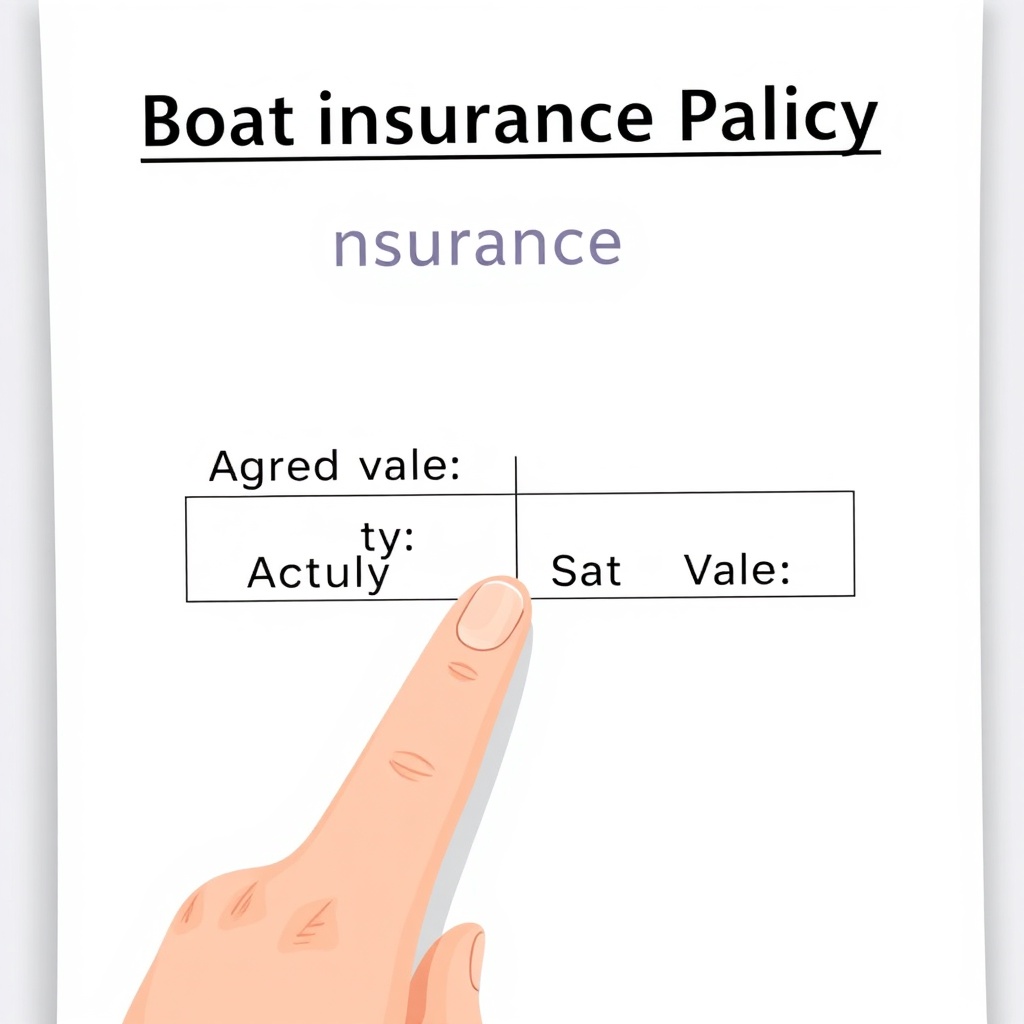
The worst-case scenario for an ACV policy is a total loss within the first three years of boat ownership. Geico calculates ACV using a depreciated current market value that can be 30–40% less than what you paid. A 2024 26-foot cabin cruiser insured for £50,000 new could be worth £33,000 ACV in 2026, leaving you with a £17,000 shortfall that your loan still demands.
Partial losses under ACV are also trickier. If you sink a £2,500 outboard motor, Geico will deduct depreciation based on the motor’s age and hours, potentially paying only £1,200. With Agreed Value on a policy that includes motor coverage, you’d receive the full replacement cost of the motor (subject to a separate motor limit). This is especially important for owners of boats with twin engines or older, hard-to-find parts.
How Do You Switch Between Agreed Value and ACV During a Geico Policy Term?
You cannot change the valuation method in the middle of a policy term — it must wait until renewal. The process is straightforward: call Geico’s boat division (BoatUS claims) about 30 days before your renewal date and request a change. They will ask for a recent marine survey if you are moving from ACV to Agreed Value on a boat older than 10 years. Expect a premium adjustment of 20–40% as discussed.
If you are moving from Agreed Value to ACV (perhaps because the boat is now a secondary water toy with low value), Geico may refund a pro-rated amount, but generally you will get a lower premium immediately. Note that ACV policies on Geico have stricter requirements for lay-up periods and winterization; make sure you comply or your claim could be denied outright. For more detail on what Geico excludes, see Geico Boat Insurance: Coverage Highlights and Exclusions.
What Do Experienced Boat Owners Say About Geico’s Valuation Options?
“I kept my 2000 Regulator on ACV for 15 years because it was cheap. Then I repowered it with a new Yamaha 250 and put in new electronics—suddenly the boat was worth £18,000 but insured for only £9,000. I should have switched to Agreed Value when I did the repower. Now I tell everyone: if you spend more than £5,000 on upgrades, call Geico immediately.” – Andrew S., Florida
“My 2015 Chaparral was stolen from the marina. I had Agreed Value set at £45,000. Geico paid that within three weeks, minus my deductible. A friend with the same boat on ACV got £31,000. That £14,000 difference paid for three years of higher premiums. Definitely worth it for a newer boat.” – Maria L., Texas
Frequently Asked Questions About Geico Boat Insurance Valuation
What is the maximum agreed value I can set on a Geico policy?
Geico does not publish a hard cap, but for most recreational boats under 40 feet, the maximum is the boat’s current replacement cost new (including engine, trailer, and installed electronics). For larger yachts, they typically require a survey and cap at 90–95% of replacement cost to avoid moral hazard.
Does Geico allow a hybrid policy where the hull is agreed value but the motor is ACV?
No. Geico’s standard policy sets the valuation method equally for the entire vessel package. You cannot split hull and motor across different valuation types. If you want different treatment for the motor, look into adding separate outboard motor insurance.
Can I adjust my agreed value down mid-term if I sell the boat?
Yes, you can request a reduction if you sell or transfer the boat, but Geico will not refund the premium mid-term unless the reduction is substantial (over 20%). The better move is to cancel the policy and get a pro-rated refund.
Does Geico apply a “new boat replacement” clause in the first year?
Yes, Geico’s standard policy includes a “new boat replacement” clause for the first 12 months of ownership, which essentially pays agreed value for a total loss. After year one, the policy reverts to the chosen valuation method (Agreed Value or ACV). Read the fine print at Geico Liability Coverage: Protecting You on the Water for more details.
Is Agreed Value always the best choice for a boat financed by a bank?
Nearly always. Banks require enough coverage to pay off the loan in a total loss. ACV can leave a gap of thousands, and a lender may demand you buy an addendum. Agreed Value provides more predictable coverage that satisfies lienholders. Check with your lender before switching to ACV.
How do I prove the actual cash value of my boat in a Geico claim?
Geico will use a combination of your survey (if recent), NADA or BUC values, and local market comps from recent sales. You should gather receipts for any upgrades, photos of the boat in good condition, and a current survey. The process is detailed in Geico Boat Insurance Claims: Step-by-Step Guide.